- April 25, 2025
- 9:00 am
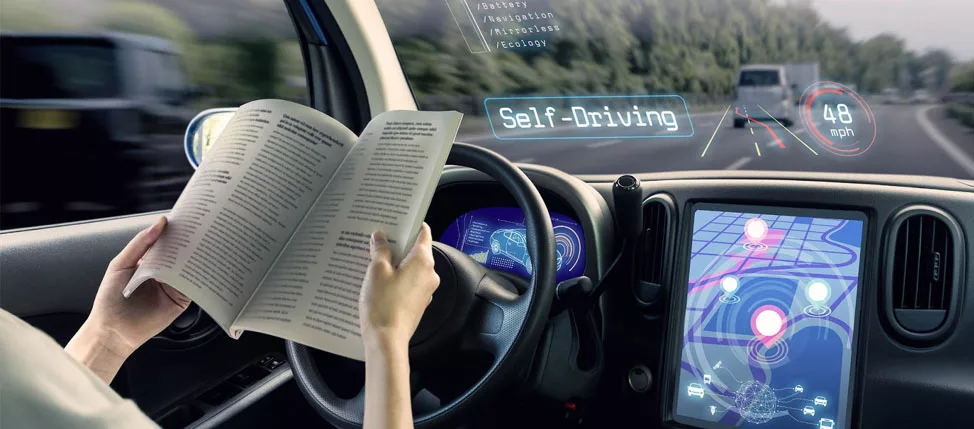
The concept of self-driving cars once seemed like something out of a science fiction movie. But today, the automotive industry is closer than ever to making autonomous driving a mainstream reality. As manufacturers continue to develop increasingly advanced driver-assistance technologies, the big question remains: how close are we, really, to fully self-driving vehicles?
While full autonomy isn’t here quite yet, understanding where we stand today—and what’s coming tomorrow—helps customers stay informed and prepared for the evolution of driving.
Understanding the Levels of Autonomy
To grasp how far we’ve come, it’s helpful to understand the levels of autonomous driving. The Society of Automotive Engineers defines six levels, from Level 0 (no automation) to Level 5 (full autonomy with no need for human intervention). Most of the technology available in vehicles today falls within Level 1 to Level 2—these include features like adaptive cruise control, lane-keeping assist, and automatic emergency braking.
Level 3 vehicles, which can handle some driving tasks independently but still require a human to take over when prompted, are beginning to surface in limited markets. Meanwhile, Level 4 and Level 5 vehicles—capable of full self-driving in most or all conditions—are still undergoing development and real-world testing.
Why We’re Not There Yet
Despite rapid advancements, several factors are slowing the path to full autonomy. The first is infrastructure. For self-driving vehicles to function safely and efficiently, consistent road signage, lane markings, and communication networks are needed—and not every region is equipped for this.
Then there’s the technology itself. While sensors, cameras, and machine learning have advanced significantly, unpredictable human behavior on the road still presents challenges. Autonomous systems must be capable of making split-second decisions in complex, real-world environments—a task that even humans struggle with.
And, of course, there’s the legal landscape. With no universal framework for liability, insurance, or traffic law, widespread rollout of self-driving cars remains limited by regional regulations.
What This Means for Drivers Today
The good news is that while full autonomy is still on the horizon, the features available in today’s vehicles are making driving safer and more convenient than ever. Many commercial and passenger vehicles are already equipped with smart features that help reduce driver fatigue, assist with parking, and improve safety in heavy traffic.
For drivers in Florida and beyond, these technologies can be especially beneficial on long hauls, busy urban commutes, or while towing trailers and heavy loads. Advanced safety systems and partial automation help create a more confident and relaxed driving experience, even if full autonomy is still a few years away.
Looking Ahead to a Smarter Drive
While we’re not quite ready to nap behind the wheel, the future is undoubtedly autonomous. Continued investment in research, infrastructure, and regulation will bring us closer to that reality. In the meantime, drivers can enjoy the benefits of increasingly smart vehicles—features that help today and pave the way for tomorrow.
At Garcia Truck And Bus Sales of Florida, we stay ahead of industry trends so our customers can make the best decisions for their needs. Whether you’re seeking a reliable commercial truck, a feature-rich trailer, or a vehicle equipped with the latest in driver-assist technology, we’re here to help.
Visit us at Garcia Truck And Bus Sales of Florida, 800 Thorpe Rd, Orlando, FL 32824. You can also reach us at (321) 200-6585 or email garciatrucks2016@gmail.com. Imagine where the road could take you—with or without your hands on the wheel.